
A lot of time can disappear during post-production without making a video noticeably better.
An editor might spend hours comparing similar clips, adjusting small transitions, changing graphics or polishing a shot that only appears for a few seconds.
Meanwhile, the bigger questions can still be waiting: Is the story clear? Does the video hold attention? Does the ending work? Is the message easy to understand?
The 80/20 rule in video editing offers a useful way to look at this problem.
Rather than treating every task as equally important, it encourages you to find the parts of the project that have the greatest effect on the finished video and give those areas most of your attention.
It is not about following an exact 80-to-20 calculation. It is about knowing where your effort matters most.
What Does the 80/20 Rule Actually Mean?

The 80/20 rule, also known as the Pareto principle, describes a situation where a relatively small number of inputs can account for a much larger share of the outcome.
In post-production, this can be surprisingly easy to see.
Changing the order of two important scenes may completely improve the story. Removing a repetitive section can make a five-minute video feel much more focused. Cleaning up dialogue can make an interview considerably easier to follow.
By comparison, spending twenty minutes choosing between two almost identical transitions may make virtually no difference to the audience. That is the practical value of the principle.
It encourages an editor to ask: Which decisions will the viewer actually notice?
That question can save time without turning the work into a race to finish.
Where Does the Biggest Difference Come From?
Every project has its own priorities, but some decisions tend to have a much greater influence on the final result. The selection of footage is one of them.
Having more material does not necessarily make an edit stronger. If five clips communicate the same idea, keeping all five can weaken the pace.
The editor's job is often to recognize which moment says it best and build around it. The order of the material matters too.
A strong scene placed in the wrong position can lose its effect. A useful piece of information introduced too early may confuse the viewer. Sometimes moving one section can improve the entire flow without changing the footage itself.
Sound is another major factor. Clear speech, balanced music and consistent volume can make a production feel considerably more polished, even when the visual treatment is relatively simple.
These are the kinds of decisions where time spent tends to pay off.
Start With the Story, Not the Effects
One of the easiest ways to lose time is to start polishing before the structure is settled.
Imagine spending an afternoon adding graphics, transitions and color adjustments to a sequence that later needs to be removed. None of that work was necessarily bad; it was simply done too early.
A better approach is to build a rough version first.
At this stage, the timeline does not need to look beautiful. It needs to answer a few basic questions:
- What is the video trying to say?
- What does the audience need to understand?
- Which moments move the story forward?
- Where does the video lose momentum?
- What can be removed without weakening the message?
Once those answers are clear, the finishing work has a much stronger foundation.
The Best Footage Is Not Always the Most Beautiful
An attractive shot is not automatically a useful shot.
A visually impressive clip may contribute very little if it interrupts the story or repeats information that the audience already understands. On the other hand, a simple shot may be extremely valuable because it explains something clearly or connects two parts of the narrative.
This is where editorial judgment becomes important.
A good video editor is not simply looking for the most impressive footage. They are looking for footage that belongs where it is being used.
That distinction becomes particularly important with interviews, corporate productions and documentary-style projects, where there may be a large amount of material but only a limited amount that genuinely needs to appear in the final cut.
Pacing Is About More Than Cutting Faster
When people talk about keeping a video engaging, faster cuts are often the first thing that comes to mind.
But good pacing is not measured by the number of cuts.
Some moments need time. A person answering an important question may need a natural pause. A product demonstration may need enough screen time for the viewer to understand what is happening. A dramatic moment can lose its impact if it is cut too quickly.
Other sections may benefit from being considerably shorter.
The skill lies in knowing the difference.
A useful edit gives important moments room while removing material that delays the message. That balance is one of the biggest contributors to a natural viewing experience.
Where Sound Fits Into the 80/20 Approach
Audio is easy to underestimate because viewers do not always notice good sound consciously. They notice when it is bad.
If speech is difficult to understand, background noise is distracting or the music suddenly becomes too loud, the audience may become aware of the production rather than the message.
That is why sound deserves attention early rather than being treated as a final checkbox.
The same principle applies to color. A consistent image can make a production feel professional, but there is little value in spending excessive time on tiny color differences when the underlying edit still needs work.
The priority should always be the part that improves the viewer's experience most.
A More Efficient Way to Work Through a Project

The 80/20 principle works best when it becomes part of the normal workflow rather than a separate productivity exercise.
Begin by understanding the purpose of the production and who will watch it. Then review the material before making major decisions.
From there, build a rough sequence around the strongest moments.
Once the structure is working, watch the piece from beginning to end. Look for places where the viewer might become confused, lose interest or receive information that does not need to be there.
Only after those problems have been addressed should you spend significant time on graphics, transitions, color treatment and other finishing details.
This order of work can make the video editing workflow considerably easier to manage because fewer major changes are being made after the project has already been polished.
When Efficiency Should Not Come Before Detail
The 80/20 rule should never become an excuse for careless work.
Some productions genuinely depend on small details.
A commercial may require carefully timed motion graphics. A brand film may have a very specific visual language. A documentary may rely on subtle changes in pacing and sound. A music video may be built around precise synchronization.
In these situations, details that look minor from the outside may actually be central to the creative concept.
So the principle should not be interpreted as “ignore the small things.”
It is better understood as:
Give the important things the attention they deserve before spending time on details that do not yet matter.
That leaves room for careful craftsmanship while reducing unnecessary work.
How This Can Help With Larger Productions
The value of an efficient approach becomes clearer when a project involves multiple deliverables.
A single production might eventually become a main company film, shorter social clips, interview extracts, event highlights or promotional material.
If the strongest material is identified early, it becomes easier to decide how that footage can be used across different versions.
It can also reduce unnecessary revisions.
When the main structure has been agreed upon before detailed finishing begins, clients and production teams are less likely to spend time polishing sections that later need major changes.
For businesses, this can make the entire video production workflow more predictable.
When Is Professional Help Worth Considering?
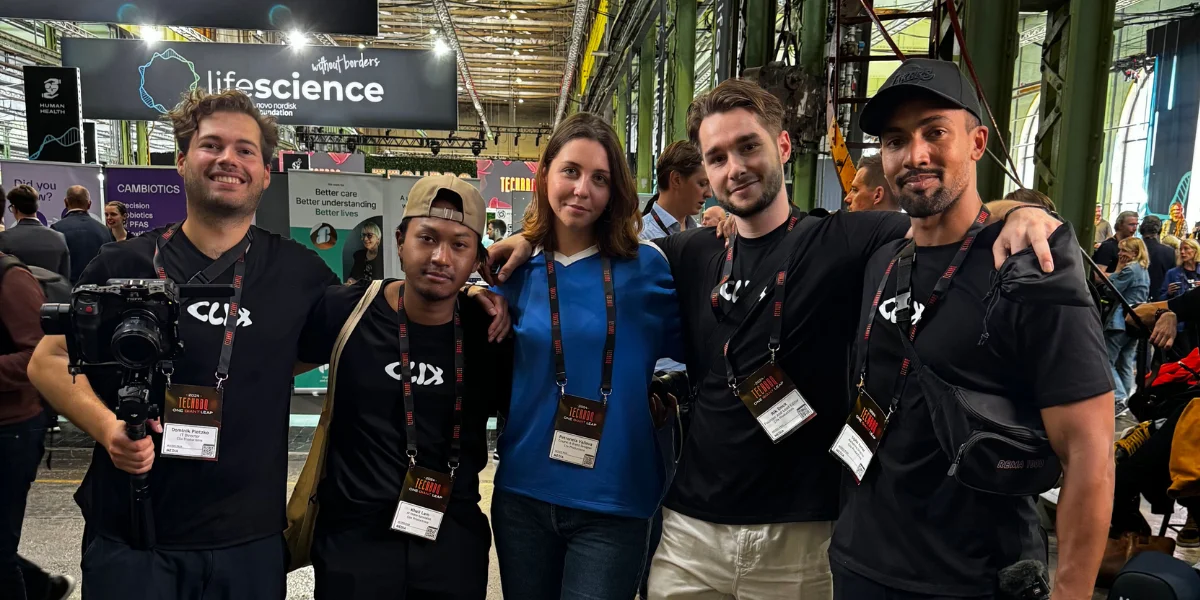
There is a difference between knowing how to use editing software and knowing how to shape a production. For a simple personal video, handling the edit yourself may be perfectly practical. A company film, event production or branded project usually requires more consideration because every scene needs to support a clear purpose.
Professional video editing services can be particularly useful when there is a large amount of footage, a tight deadline or several versions to create.
Understanding how to choose the right video creator or production team can also make the process easier, especially when creative direction and post-production need to work together.
At Clix Productions, our team in København, Denmark works across editing and post-production, helping shape footage into a coherent final production rather than simply assembling clips.
The real value lies in knowing what to keep, what to remove and where creative or technical adjustments will make a meaningful difference to the finished video.
Two Simple Questions to Ask Before Finishing an Edit
Before considering a project complete, step away from the software for a moment and watch the video as an ordinary viewer.
Ask yourself: Does every important section have a clear purpose?
If the answer is no, more effects probably will not solve the problem.
Then ask: What is the one thing I would change if I only had another hour?
That question often reveals where the remaining high-value work is.
It might be a weak opening, a confusing section, an audio problem or a sequence that simply lasts too long.
Fixing that issue may be more valuable than making ten smaller adjustments elsewhere.
FAQs
Is the 80/20 rule an exact formula?
The 80/20 ratio is a way of thinking about priorities rather than a strict measurement. Different projects will have different relationships between effort and results.
What should I focus on first when editing?
Start with the purpose and structure. Make sure the story is understandable and the material is relevant before spending substantial time on visual polish.
Does the principle mean using fewer effects?
Effects can be an important part of a production when they support the creative idea. The point is to use them intentionally rather than adding them simply because they are available.
Can this approach work for short videos?
Short videos often require particularly careful selection because there is limited time to communicate the idea. Removing unnecessary material can make the message clearer.
Is the 80/20 rule useful for professional projects?
As a way of prioritizing work. It does not replace quality control or creative detail; it helps determine which areas should receive attention first.
Conclusion
The most useful lesson from the 80/20 rule is not the number itself. It is the idea that some editing decisions matter much more than others.
A strong production starts with the right footage, a clear structure and thoughtful pacing. Once those elements are working, sound, color, graphics and other finishing details can strengthen what is already there.
The goal is not to add more to the timeline. It is to understand what genuinely improves the finished video and give those decisions the attention they deserve.
For businesses that need experienced support with editing and video post-production, Clix Productions can help shape recorded material into clear, polished content while keeping the creative purpose of the project at the center.